
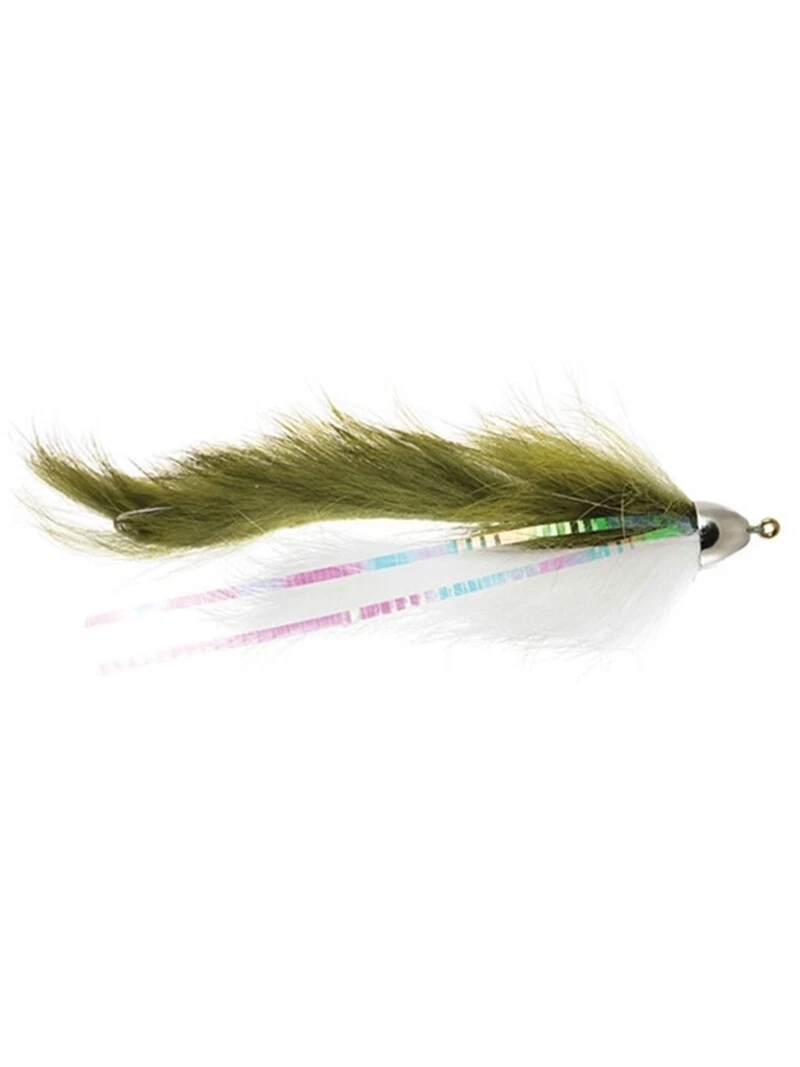
On Southwest Alaska’s big, fast rivers, you need a fly that sinks fast, fishes itself, and survives log jams. The Dolly Llama delivers on all three counts, which is why it’s overtaken even the legendary Egg Sucking Leech as the go-to pattern on Alaska Rainbow Adventures floats from the Kanektok to the Arolik. This articulated predator is a chameleon that shifts roles throughout the season – from sculpin imitator in June to salmon smolt in July to rotting flesh by late August – all driven by its heavy tungsten cone head and rabbit-strip body that undulates independently on a trailing stinger hook, creating a life-like “swim” that traditional streamers simply cannot duplicate.
Setting Up Your Dolly Llama Fly Box
When preparing for a 7- to 10-day float, your fly box should be organized by “Mission Profile” and season. For early season trips (June through early July), focus on Size #4 and #6 patterns when rainbows and char are post-spawn hungry and actively feeding before salmon arrive. You’ll want at least 8 Black/White “Workhorses” for high-contrast visibility in high, cold water, alongside 6 Olive/White “Sculpins” that perfectly imitate the resident forage fish rainbows are targeting. The heavy cone head is essential during this period for getting down fast in high water conditions.
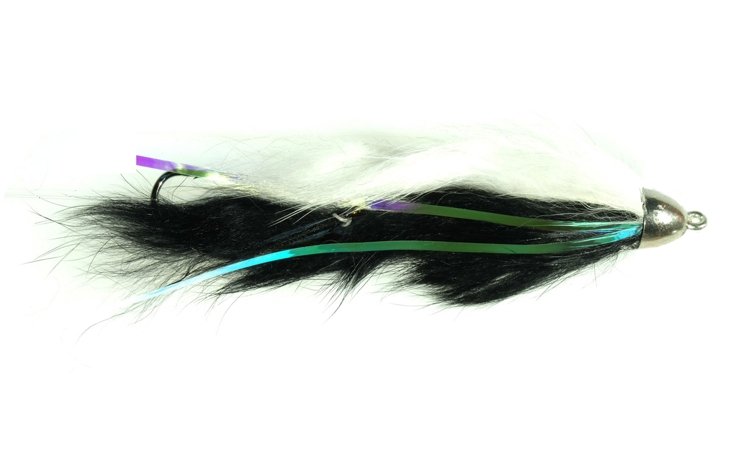
As you move into mid-season (mid-July through early August), when king salmon are entering and sockeye runs begin, step up to Size #2 “Heavy-Hitters.” Keep Black/White as your workhorse pattern, but add Black/Purple “Silver Slayers” for variety and aggressive fish. This is also peak mouse season—while you’ll want mouse patterns for evening surface action, the Llama remains your subsurface producer through mornings and mid-day when fish are holding tight to structure.
Late season (mid-August through September) is when your fly box needs a complete color shift. As rivers fill with dying and dead salmon, rainbows dial in exclusively on flesh and eggs. This is when Flesh, Peach, and Pink/White Llamas become essential – you’re matching what trophy rainbows are gorging on before winter. Carry at least 6-8 of these patterns in Size #2 and #1/0. Big fish want maximum calories per strike, and they’re not chasing – they’re intercepting what drifts past.
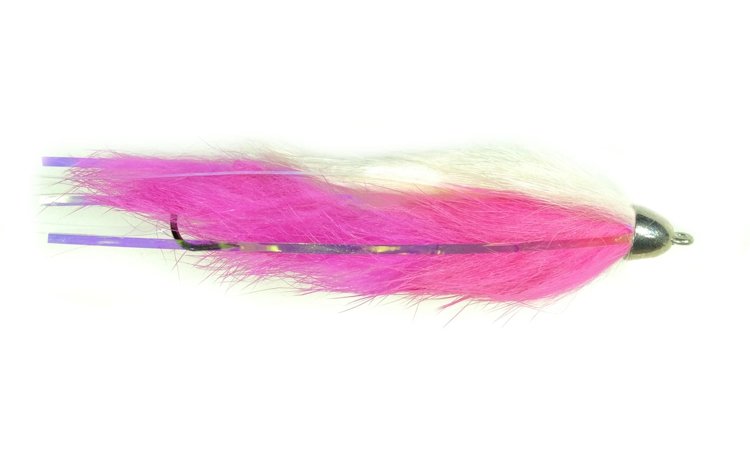
When targeting Silver Salmon or trophy Leopard Rainbows across any season, Fuchsia or Pink/White versions are essential for stained water or aggressive Chum salmon. Always carry a pack of spare Size 2 and 4 stinger hooks, as the rocky bottoms of the Goodnews and Kanektok will dull your points long before you lose the fly.
Tactical Execution from the Raft
Fishing from a moving raft requires a different mindset than wading; you are often moving at the speed of the current, meaning your fly needs to work instantly. In early and mid-season, your most effective move will be the “Bank-Slap.” Cast your Llama within inches of the cutbanks or overhanging willows and give it two sharp, erratic strips the moment it hits. This “jigging” action pulls big rainbows out of the shadows before the boat pulls you past the target. Mid-July through early August, when fish are holding tight to logjams waiting to ambush, this technique becomes absolutely lethal.
In the deeper “buckets” or mid-river seams, transition to a Dead-Drift Dredge. Cast upstream and mend your line aggressively to let the heavy cone head plummet. Even without stripping, the articulated tail will waggle in the current, perfectly imitating a stunned baitfish or – especially in late season – a chunk of salmon carrion tumbling downstream. From mid-August through September, dead-drift your Flesh or Peach Llamas directly behind spawning salmon beds and let it tumble naturally with no stripping needed. Trophy rainbows are staging on carcasses in deep buckets, and this is your “search” pattern before switching to eggs or beads once you locate fish.

Post-spawn and into freeze-up (late September-October), slow everything down. Return to Black/White high-contrast patterns in Size #4 for visibility in low light and cold water. Fish are lethargic but will still eat – they just won’t chase. Dead-drift with long pauses, focusing on slower inside bends and slack water where fish are conserving energy.
Because these flies are heavy and water-absorbent year-round, use a “Water Load” cast—let the current pull the line tight behind the boat, then use that tension to launch the fly in a single, fluid motion to avoid “birdnesting” your line in the ever-present Tundra wind.
Proper Tackle & Rigging
To turn over these “wet socks” effectively, a 8-weight rod is the gold standard for Southwest Alaska. Pair it with a Weight Forward Floating line featuring a short, aggressive front taper to help punch through the wind. Keep your leaders short – 7.5 feet tapering to 12lb or 15lb fluorocarbon. A shorter leader allows the fly to sink faster and provides the strength needed to pull a 10lb Coho away from a log jam.
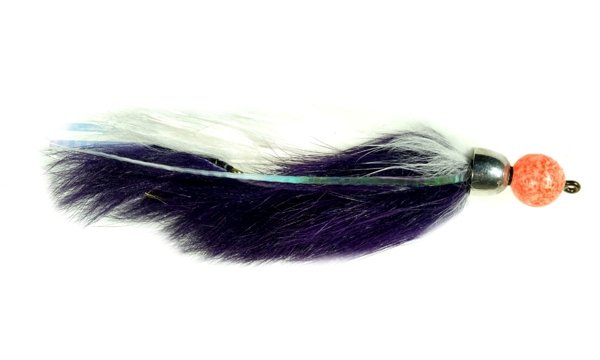
If the bite turns technical in clear water – common during mid-season low flows – try sliding an 8mm plastic bead onto your leader before tying on the fly; this creates an “Articulated Egg-Sucking Leech” that can trigger even the most pressured fish.
The Universal Truth: Throughout the entire season, the Dolly Llama remains effective because it adapts to what rainbows are eating. Early season: sculpins. Mid-season: smolt and baitfish. Late season: flesh. It’s not one fly – it’s a system.
