
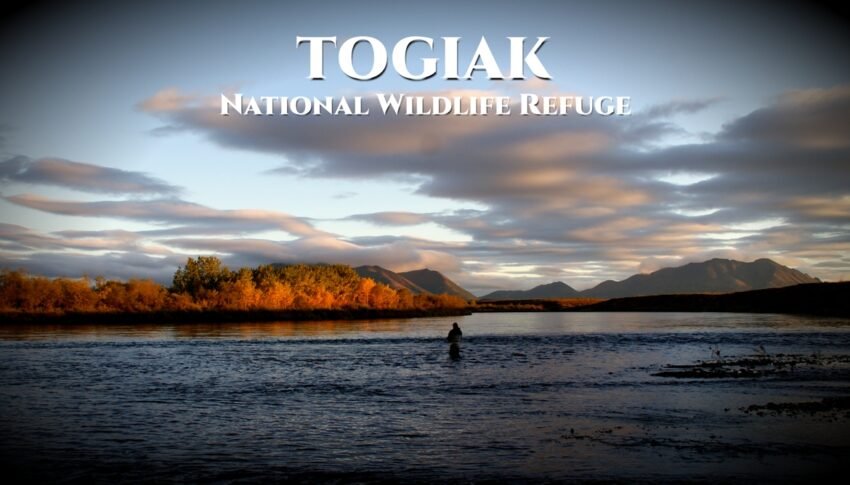
In the heart of Southwest Alaska, where the Ahklun Mountains meet Bristol Bay, lies one of North America’s most remarkable wilderness sanctuaries. The Togiak National Wildlife Refuge sprawls across 4.7 million acres—an expanse the size of Connecticut and Rhode Island combined—encompassing a landscape so diverse and pristine that it defines what true wilderness means in the modern world.
A Landscape Carved by Time
The refuge is dominated by the Ahklun Mountains, which spread across 80 percent of its territory. These ancient peaks, reaching heights over 5,000 feet at Mount Waskey, tell a geological story written by volcanic fire and glacial ice. While earthquakes and volcanoes once violently shaped this land, it was the patient advance and retreat of glaciers that carved the dramatic valleys, clear mountain lakes, and fast-flowing rivers that characterize the refuge today.
From mountain crags to tundra uplands, from marshy lowlands to coastal lagoons and sea cliffs, the Togiak Refuge presents what can only be described as a kaleidoscope of landscapes. Perhaps most importantly, these diverse terrains support an extraordinary wealth of fish habitat—habitat that has sustained life here for millennia.
The People of the Refuge: A Culture Built on Rivers
Long before the Togiak National Wildlife Refuge existed as a designated conservation area, it was home. Archaeological evidence indicates continuous human habitation in this region for at least 4,000 to 5,000 years. The Yup’ik peoples—particularly the Togiagamiut—have called these river valleys home since time immemorial, their culture inseparably woven into the seasonal rhythms of the salmon runs.
The Yup’ik established their winter villages along rivers near the coast, following a pattern of seasonal movement that demonstrated profound understanding of the land and its resources. In spring and fall, families traveled into the interior to hunt and gather berries. In midsummer, they returned to their villages for the salmon runs—those crucial weeks when the rivers filled with fish that would sustain them through the harsh winter months when weather prevented food gathering.
This way of life continues today. The Yup’ik communities of the region—including Togiak, Manokotak, and others—still depend heavily on subsistence harvesting. In the Bristol Bay region, salmon comprises approximately 52 percent of the subsistence harvest, with subsistence from all sources accounting for an average of 80 percent of protein consumed by area residents. These aren’t mere statistics—they represent living traditions passed from grandparents to grandchildren, knowledge accumulated over millennia, and a relationship with the land that defines cultural identity.
The Birth of a Refuge
The formal designation of Togiak National Wildlife Refuge came on February 11, 1980, under the Alaska National Interest Lands Conservation Act (ANILCA). This landmark legislation dramatically expanded an earlier 265,000-acre reserve to its present 4.7 million acres, recognizing the irreplaceable value of these lands for wildlife, wilderness, and the people who depend on them.
Congress stated its intent clearly: to preserve unrivaled scenic and geological values, to maintain sound populations of wildlife species, to protect resources related to subsistence needs, and to preserve wilderness resources and related recreational opportunities. The act recognized that these purposes weren’t competing interests but interwoven values that must be balanced.
Within the refuge, the Togiak Wilderness encompasses nearly 2.3 million acres—the second largest wilderness area managed by the U.S. Fish and Wildlife Service. Here, motorized equipment is prohibited, and the land remains as wild and untouched as it has been for centuries. Parts of the Kanektok, Goodnews, and Togiak river drainages fall within this designated wilderness, ensuring their protection for future generations.
Rivers of Life
Three major river systems flow through the Togiak Refuge, comprising over 1,500 miles of pristine waterways. The Kanektok, Goodnews, and Togiak rivers are the lifeblood of this ecosystem, supporting one of the most productive salmon fisheries on Earth. More than one million salmon return to these waters each year to spawn—all five Pacific salmon species: Chinook (King), Sockeye (Red), Coho (Silver), Pink, and Chum.
These rivers are remarkable not only for their salmon runs but for their complete ecosystems. Rainbow trout, some displaying the distinctive leopard spots that make them icons of Alaska fishing, thrive in these cold, clean waters. Arctic char and Dolly Varden patrol the deeper pools. Arctic grayling rise to feed in the riffles. The entire food web depends on the annual return of the salmon—from the tiny invertebrates that feed on salmon eggs and carcasses, to the birds and bears that feast on the runs themselves.
The Kanektok: The Chosen River
Spanning approximately 95 miles from Kagati Lake to Kuskokwim Bay, the Kanektok River flows through the heart of the Ahklun Mountains before meandering onto the coastal plain. Often called “The Chosen River” by those who fish it—a name that speaks to its near-perfect conditions—the Kanektok is renowned for its crystalline clarity and prolific wildlife. Its upper reaches cut through dramatic mountain valleys, while its lower sections wind through willow, alder, and cottonwood forests on the coastal plain.
The Kanektok is particularly famous for its leopard rainbow trout fishing. The river’s abundant population of small rodents—voles and lemmings—serves as a critical food source for these large, hungry, and aggressive trout. This creates opportunities for mouse pattern and topwater fishing techniques that draw anglers from around the world, with early season offering particularly good conditions for fishing the surface.
The Goodnews: Concentrated Excellence
The Goodnews River, flowing approximately 50-60 miles from its headwaters in the Ahklun Mountains to Kuskokwim Bay, offers a more intimate experience. What it lacks in length, it makes up for in fish density and diversity. The Goodnews produces consistent fishing throughout the season, with different species dominating at different times—from the powerful Chinook salmon of early summer to the acrobatic Coho of fall, and the ever-present rainbow trout, char, and Dolly Varden that make every cast an adventure.
The Togiak: Big Water, Big Fish
The Togiak River, rising on the western slopes of the Wood River Mountains, drains the southeastern quadrant of the refuge. It flows wide and relatively easy compared to its faster neighbors, but what it offers in accessibility, it matches in productivity. The Togiak supports important subsistence and commercial fisheries near its mouth, while its upper reaches provide excellent sport fishing opportunities.
The Delicate Balance: Subsistence, Commercial, and Sport Fishing
The rivers of the Togiak Refuge serve multiple purposes, and managing these competing demands requires constant attention and respect. Subsistence fishing receives priority status, as it should—the Yup’ik communities depend on these resources for survival, not recreation. The annual subsistence harvest of salmon in the Bristol Bay region provides not just food but cultural continuity, economic stability in a region with limited employment opportunities, and the foundation for traditional knowledge transfer between generations.
Commercial fishing operations, concentrated near the river mouths and in Bristol Bay itself, generate hundreds of millions of dollars in economic activity. The Bristol Bay sockeye salmon fishery is the largest in the world, with the Togiak Refuge rivers contributing significantly to this natural treasure.
Sport fishing, while lower priority than subsistence use, is specifically recognized in ANILCA as an appropriate use of refuge resources. The U.S. Fish and Wildlife Service carefully manages sport fishing through a permit system, limiting the number of commercial operators and ensuring that recreational use doesn’t conflict with subsistence harvesting or damage fish populations.
The Float Trip Experience: The Only Way to Know These Rivers
There’s something elemental about traveling down a river. No roads penetrate the Togiak Refuge. No trails wind through its wilderness. The only way to truly experience these waterways is by floating them—spending days moving downstream with the current, camping on gravel bars, and living within the rhythm of the river itself.
A float trip through the Togiak Refuge isn’t just a fishing vacation—it’s an immersion in wilderness. You wake to the sound of the river, watch brown bears fishing the opposite bank, cast to rising trout under the midnight sun, and sleep beneath skies so dark and clear that the northern lights dance overhead. You fish waters that have changed little since the Yup’ik first paddled them in skin boats, and you gain perspective that’s impossible to achieve from a lodge or a day trip.
Float fishing offers access to pristine waters far from the concentrated fishing pressure near road systems or lodges. Each day reveals new water, new possibilities. You might spend a morning working a promising riffle for rainbow trout, then drift into a section where Coho are pushing upstream, their silver bodies flashing in the current. You’ll camp where the fishing looks promising, not where someone built a building decades ago.
The self-contained nature of float trips also means you’re genuinely in the wilderness, not just visiting it from a comfortable base camp. This brings a sense of accomplishment and connection that’s increasingly rare in modern life. You become, for a week or more, a temporary part of the ecosystem rather than an observer passing through.
Respecting Resources, Honoring Traditions
Those who guide float trips in the Togiak Refuge carry a significant responsibility. The U.S. Fish and Wildlife Service doesn’t issue special use permits lightly—they’re awarded to operations that demonstrate not just competence in wilderness guiding, but commitment to conservation principles and respect for the refuge’s multiple values.
Alaska Rainbow Adventures has operated under special use permits in the Togiak Refuge since the early 1990s. While our permitted rivers have evolved over the years, our operating principles have remained constant. This long-term commitment speaks to consistent adherence to high standards, but more importantly, it reflects an understanding that these rivers don’t belong to any one group. They belong to the Yup’ik people who have fished them for five thousand years. They belong to the salmon that return here to spawn. They belong to the bears and eagles and Arctic char. They belong to future generations who deserve to know true wilderness.
This means operating with minimal impact. It means limiting group sizes to preserve the solitude that makes wilderness valuable. It means educating clients about Leave No Trace principles and the cultural significance of these waters. It means respecting subsistence fishing activities and recognizing that sport fishing is a privilege, not a right.
It also means understanding the resource itself. Three decades of continuous operation on these rivers provides knowledge that can’t be gained from books or single seasons—understanding of fish behavior through the season, knowledge of weather patterns and river conditions, familiarity with wildlife movements and safe camping practices. This accumulated expertise allows for better fishing, certainly, but more importantly, it ensures that clients experience the refuge safely and with appropriate reverence.
A Living Laboratory
The Togiak Refuge isn’t a museum piece—it’s a living, functioning ecosystem where natural processes continue largely unimpeded by human activity. Within its borders, over 500 plant species have been documented, demonstrating remarkable biodiversity for a sub-arctic region. Some 201 bird species have been recorded, including threatened species like Steller’s and spectacled eiders. Cape Peirce, on the refuge’s southwestern tip, hosts one of only two regularly used land-based haul-outs for Pacific walrus in North America, with up to 12,000 males hauling out at once.
The refuge supports 48 mammal species, including healthy populations of brown and black bears, wolves, wolverines, caribou, and moose. Two caribou herds—the Nushagak Peninsula and Mulchatna herds, totaling over 150,000 animals—use refuge lands seasonally.
This biodiversity isn’t accidental. It’s the result of intact ecosystems where predator-prey relationships remain balanced, where salmon carcasses fertilize the entire food web, and where habitat remains undisturbed. The Togiak Refuge protects not individual species but the processes that create and maintain biological richness.
The View from the Raft
From water level, traveling downstream day after day, you begin to understand what the Togiak Refuge protects. It’s not just fish or bears or scenery, though it encompasses all these things. It’s the whole of the system—the way everything connects, the way the salmon run feeds the land, the way the land shapes the river, the way the river shapes the lives of everything that depends on it.
You see the Yup’ik set net sites near the river mouth and understand them not as competition but as part of a cultural tradition that extends back through countless generations. You watch a brown bear catch a salmon and recognize that you’re witnessing the same scene that’s played out here since the glaciers retreated. You release a rainbow trout and know it might live another decade or more, continuing the cycle.
Float fishing in the Togiak Refuge isn’t about conquering wilderness or extracting resources—it’s about participating briefly in something much larger and older than ourselves. Done correctly, with proper respect and minimal impact, sport fishing becomes a form of conservation education, creating advocates who understand what’s at stake when these wild places face threats.
Looking Forward
The Togiak National Wildlife Refuge stands as testament to what can be protected when we recognize the interconnected values of wilderness, wildlife, and human culture. It proves that subsistence use, recreational opportunity, and conservation can coexist when managed thoughtfully.
The refuge’s rivers continue to flow free—no dams impede their courses, no development crowds their banks. All five Pacific salmon species still return by the millions. The Yup’ik communities continue their seasonal harvests. And visitors fortunate enough to float these waters gain perspective on what wilderness means in a crowded world.
Those of us privileged to guide on these rivers share a responsibility to protect what makes them special. Every trip should leave the river exactly as we found it. Every client should leave understanding not just how to catch fish, but why these places matter. Every season should reinforce the commitment to operate sustainably, respectfully, and with gratitude for the opportunity to work in one of Earth’s last truly wild sanctuaries.
The Togiak National Wildlife Refuge and its rivers represent Alaska at its finest—wild, productive, beautiful, and essential. They deserve our respect, our care, and our commitment to keeping them that way for the next five thousand years.
Alaska Rainbow Adventures has been running fully permitted float fishing trips since 1993. Operating under permits from the Togiak National Wildlife Refuge and the National Park Service, we specialize in multi‑day guided expeditions on the Kanektok, Goodnews, Arolik, Alagnak, Togiak, and other remote Alaskan waters. After more than 30 years working under these authorizations, we remain committed to delivering world‑class fishing experiences while upholding the highest standards of environmental stewardship and cultural respect.
